
Why an on-site inspection is worth arranging
The premises are seen firsthand
A physical visit helps us assess real conditions rather than rely on supplied documents alone.
Practical gaps become visible
Issues with access, housekeeping or damaged precautions are easier to identify on site.
Written follow-up supports action
Documented findings give you a clearer record of what now needs attention.
Why a site inspection shows what paperwork can miss
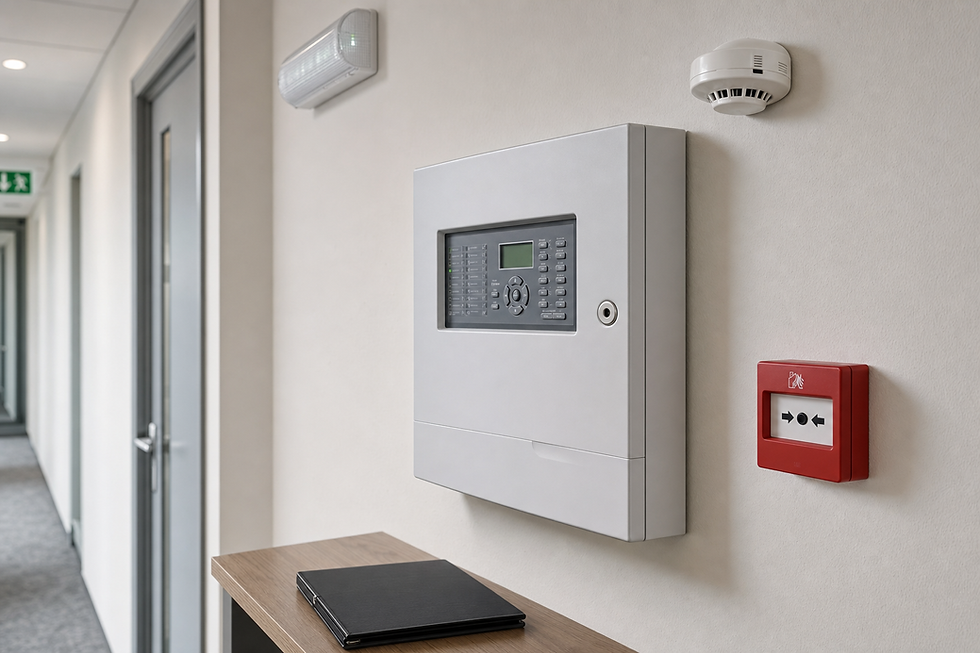
Policies and records matter, but they don't always show the full picture. A fire safety inspection involves physically examining the premises so we can see whether escape routes, exits, fire doors, signage, emergency lighting, alarms, fire-fighting equipment and housekeeping are in the condition your building needs. From Hereford, we carry out site-based inspections that focus on what is actually present, accessible and working in practice, including access that may affect evacuation and emergency response.

Preparing for a more useful visit and report
The best inspections happen when relevant areas are accessible and a knowledgeable representative is available to explain normal use of the site. Fire records can also help us compare documented arrangements with what is seen during the visit. After the inspection, we document our observations and convert them into practical written findings, so you have a clearer basis for any follow-up work that now needs organising.
Frequently asked questions
What areas are covered during the inspection?
That depends on the premises, but we commonly look at escape routes, exits, fire doors, signage, emergency lighting, alarms, equipment, housekeeping and access that could affect evacuation. The aim is to assess what the building and its precautions show in real use.
What should we prepare before the visit?
Please arrange access to all relevant areas, have any useful fire records available and make sure a site representative who understands the premises can speak with us. That makes the inspection more effective and helps us interpret what we see in the right operational context.
Do inspections lead to written recommendations?
Yes. We document the observations made during the visit and set out practical follow-up recommendations. That gives you a written record of the issues identified and helps you plan the next steps instead of relying on memory or informal discussion.